
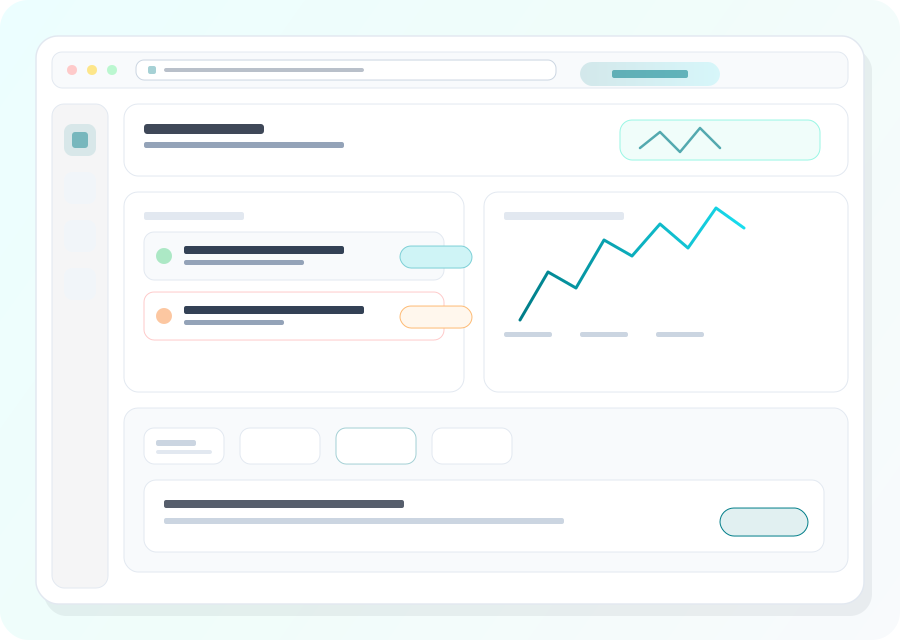
VIP and leadership risk
Coverage areas
Domains, social, app stores (scoped to your program)
Delivery
Platform workflows + optional managed services
Outputs
Prioritized queues, evidence, takedown tracking
Coverage
Threat patterns programs typically monitor
Programs are tuned to your marks and channels; the list below reflects common categories teams prioritize.
Web impersonation & lookalike hosts
Domains and pages that mimic your login, checkout, or support experiences-prioritized by live content and customer impact.
Brand misuse in social & marketplaces
Impostor profiles, scam storefronts, and misleading listings that borrow your name, marks, or creative assets.
Mobile abuse surfaces
Suspicious or misleading app listings that could confuse users alongside your legitimate mobile footprint.
Scam campaigns & lures
Promotions, giveaways, and messaging that funnel victims toward fraud-often crossing email, web, and social.
Executive & VIP impersonation
Personas and channels pretending to be leadership or finance personas to pressure employees or partners.
Operational evidence & takedowns
Repeatable documentation and status tracking for hosts, registrars, and platforms so actions are defensible and auditable.
Cross-channel VIP defense with fewer noisy alerts
The core moves for leadership risk, FAQs and the response playbook cover evaluation, after-hours rules, and tabletop prep.
Where impersonation chains together
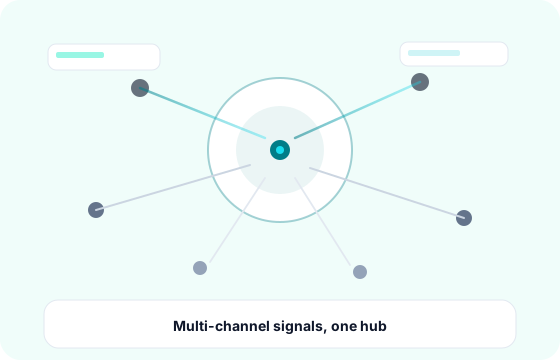
Clone profiles, lookalike domains in email or DMs, misleading apps, deepfake lures, and phishing pages that cite leadership often chain: social points to a domain points to a wallet drain. Coverage should connect those signals instead of siloing social and web queues.
What a VIP program optimizes for
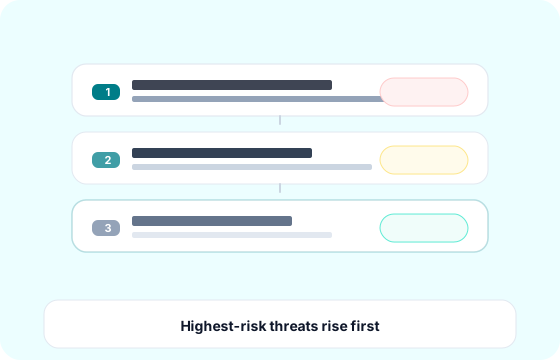
Fewer, higher-confidence alerts than company-wide monitoring; faster escalation and pre-agreed comms trees; watchlists built from approved identifiers and public imagery with privacy alignment. Severity reflects credibility and reach, payment scams and wide distribution outrank minor parody, even when counsel tracks both.
One case file for platforms and providers
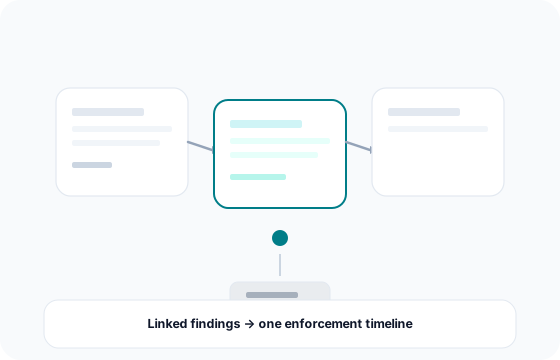
When infrastructure overlaps, evidence should travel as one pattern, not isolated screenshots. Role-based views give security detail, communications cautious language, and legal exports suitable for disputes and appeals.
Fast takedowns, aligned stakeholders
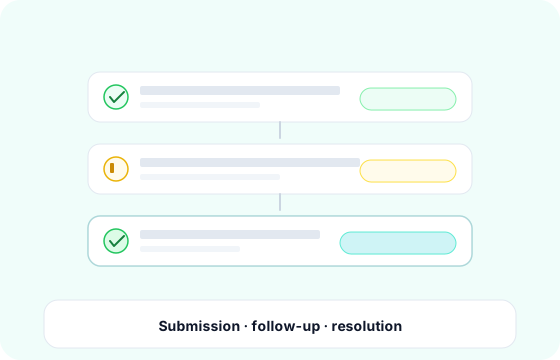
Track submissions, follow-ups, and partial mitigations like any enforcement pipeline. When platforms lag, alternate containment may run in parallel. Exportable timelines help PR and legal brief from verified facts, what is confirmed, suspected, and safe to say publicly.
Who this is for
Corporate communications, security, legal, and EA teams supporting high-profile leaders. Boards and risk committees that need defensible reporting on impersonation volume, closure, and escalation, without alert floods executives learn to ignore.
Protect revenue and customer trust
See how PhishEye centralizes detections, evidence, and takedowns so security, fraud, and brand teams share one operational picture.
FAQs
Common questions
Which channels matter for executive impersonation?
How should communications and legal be involved?
Can we protect a small set of high-profile leaders only?
How is VIP monitoring different from company-wide brand monitoring?
Ready to scope a program for your marks and channels?