
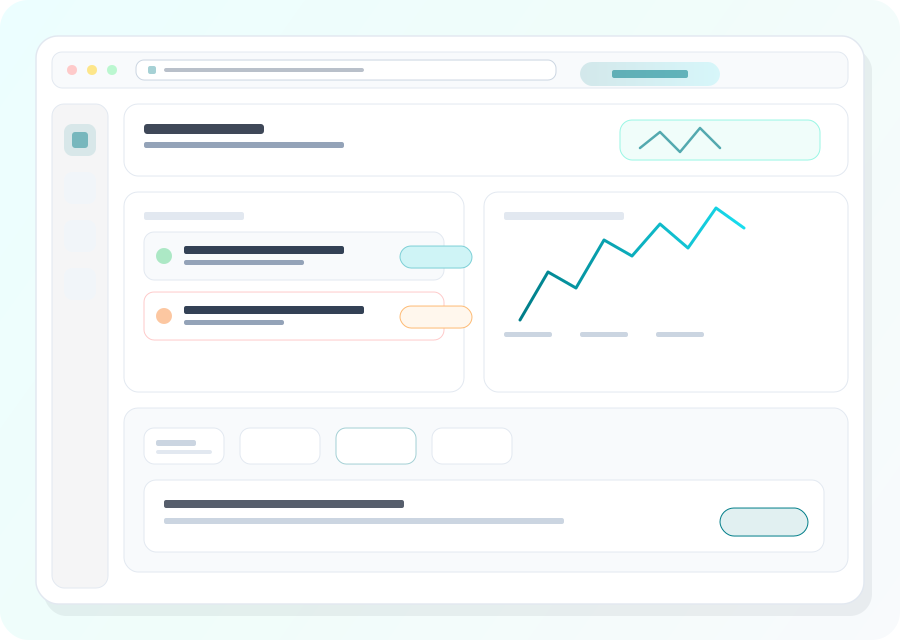
Coverage areas
Domains, social, app stores (scoped to your program)
Delivery
Platform workflows + optional managed services
Outputs
Prioritized queues, evidence, takedown tracking
Coverage
Threat patterns programs typically monitor
Programs are tuned to your marks and channels; the list below reflects common categories teams prioritize.
Web impersonation & lookalike hosts
Domains and pages that mimic your login, checkout, or support experiences-prioritized by live content and customer impact.
Brand misuse in social & marketplaces
Impostor profiles, scam storefronts, and misleading listings that borrow your name, marks, or creative assets.
Mobile abuse surfaces
Suspicious or misleading app listings that could confuse users alongside your legitimate mobile footprint.
Scam campaigns & lures
Promotions, giveaways, and messaging that funnel victims toward fraud-often crossing email, web, and social.
Executive & VIP impersonation
Personas and channels pretending to be leadership or finance personas to pressure employees or partners.
Operational evidence & takedowns
Repeatable documentation and status tracking for hosts, registrars, and platforms so actions are defensible and auditable.
What to automate first
High‑volume, pattern‑stable abuse: lookalike retail domains, cookie‑cutter phishing kits, and cloned login templates with predictable evidence.
What stays manual
Novel legal theories, slow jurisdictions, and providers that demand custom letters. Automation should surface these-not hide them in a black box.
Operational reporting
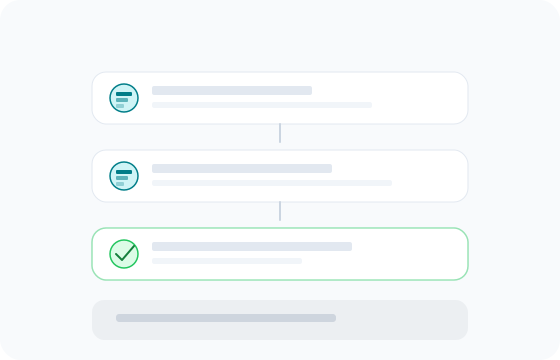
Throughput, recycling rate, and median time‑to‑suspend become leadership metrics alongside raw detection counts.
Protect revenue and customer trust
See how PhishEye centralizes detections, evidence, and takedowns so security, fraud, and brand teams share one operational picture.
FAQs
Common questions
What should be automated first?
What should not be fully automated?
How do we measure automation success?
Can analysts pause, override, or roll back automated steps?
Ready to scope a program for your marks and channels?